
Dead Raccoon Removal in Wisconsin
Dead raccoon removal runs to a short list of places: under a deck, in a garage, in a chimney, in an attic, along a fence line, or on the terrace between the sidewalk and the curb, which is the line where most cities stop. Raccoons are handled as a rabies-vector species, so gloves and a bag come before the lifting, and a health department comes before both if anyone had contact.
- Phone first
- Nothing is priced on this site
- Your ZIP decides
- Who, if anyone, can take it on
- Quoted on the call
- Once the job is known
- ✓ Wisconsin statewide · one number
Who handles dead raccoon removal in Wisconsin?
Road class answers this until the pavement ends. On the shoulder of an Interstate, US or state highway, WisDOT maintenance, which the manual leaves to landfill a small animal, bury it or move it into thick roadside vegetation on no published timeline; in the traveled lane, 911. On a county trunk highway, the county highway department. On a city street, the city, under its own policy. The state writes that county and city split down for deer; for a smaller animal each agency sets its own scope, and most of the county departments checked for this site publish none. On private property, the owner. Past that property line no Wisconsin agency takes the removal on, so Wisconsin Dead Animal Removal reaches an independent operator if one is available for the address; no operator's coverage is confirmed in Wisconsin yet, so whether this situation can be taken on, and the price, are settled on the call. Call (414) 928-2653.
What dead raccoon removal covers, and what it does not
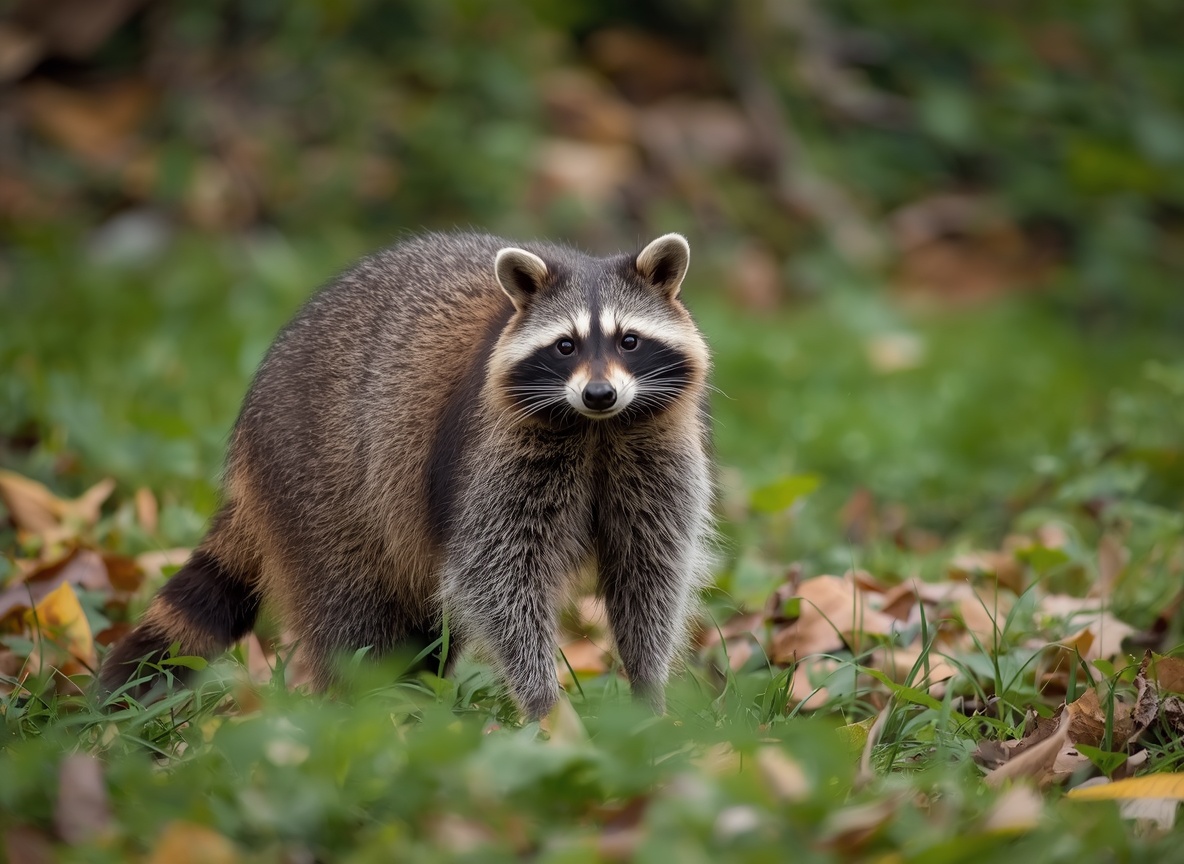
Older neighborhoods give a raccoon plenty of places to den, Milwaukee's north side and Madison's east side included, and a den is usually where one dies. Two things decide the outcome: rabies-vector handling, which applies before anything gets lifted, and the spot, since a street or terrace can be a city job, a bagged small carcass can sometimes go in the cart, and under a deck or inside a chimney it is an operator's quote.
Removal is carried out by independent operators. Their permits, their insurance and their answer for how the carcass is disposed of are their own, and none of it is checked or vouched for here. This site sells advertising and puts the call through. What any one operator will take on comes out in that conversation, not here.
Whose job is a dead raccoon in Wisconsin?
Road class decides it, and that split is one of the few pieces of this subject the state writes down. WisDOT's Highway Maintenance Manual 07-15-01 puts it in one sentence: "Counties are responsible for removing deer carcasses on county highways. Towns, villages and cities are responsible for removing deer carcasses on their local roads." That sentence is about deer. The roads do not change for a smaller animal, but no state instrument assigns the pickup, and each agency is left to whatever scope it publishes for itself. The state system itself runs on car-killed deer contracts, which cover less than the name suggests, and no Wisconsin statute pushes any of this onto a homeowner's yard.
- Interstates, US and state highways: the WisDOT contract requires its car-killed deer vendor to clear a deer from the shoulder and right-of-way no later than two business days after a report, and the manual does not require pickup on weekends or holidays. A deer in the traveled lane is outside the contract: call 911. Off the lane, WisDOT sends the report to the county sheriff's non-emergency line and publishes no carcass number of its own. Everything else on the same road is outside that contract: "The remains of small animals are not the responsibility of WisDOT CKD contractors," and the manual leaves maintenance to landfill them, bury them or move them into thick roadside vegetation, on no published timeline.
- County trunk highways (the lettered routes): the county, under the same WisDOT allocation, which is written for deer. The county highway departments checked for this site publish nothing at all about other species, and the one that publishes a deer policy, Eau Claire County, removes a carcass only when it is a hazard and otherwise moves it to the ditch. WisDOT lists a highway commissioner for all 72 counties.
- City streets: the city, under whatever it publishes. Milwaukee takes reports at (414) 286-CITY (2489); Madison through Report a Problem or 608-266-4430; Kenosha's Street Division at 262-653-4070; Racine's Customer Service at 262-636-9171. Each city page quotes its own wording.
- Your own ground, from the side lot to the crawl space: yours to arrange, whether it is behind a Milwaukee bungalow, under a deck, in a garage or beneath a Madison ranch. Wisconsin DNR's guidance for a dead wild animal is to bury it on your property or double-bag it into the trash; § 95.50's disposal deadline covers livestock and domestic animals, not wildlife. That private-property case is what this site exists for.
The agency-by-agency breakdown, with the quotes, is in the guide to who picks up dead animals in Wisconsin.
A dead raccoon removal call, start to finish
- Confirm whose ground it is on: a raccoon on the street or the terrace is the city's call in the cities that publish a service; in a yard, under a deck or in a structure it is the owner's.
- Bare hands are out, and so is letting a dog or a child near it before it is bagged. If contact already happened, with a person or a pet, the local health department is the first call and removal is the second.
- Say where it is and what sits between it and a pair of hands: deck skirting, a chimney flue, an attic hatch, a soffit gap, or finished drywall. Only the last of those puts it out of reach.
- One call covers both: whether an operator is available for the address, and what the work will cost, quoted before anyone drives out.
- The operator bags it, carries it out and handles the disposal end. Whether the soaked insulation, soil or decking goes with it is settled inside the same quote.
Who sets the price for a dead raccoon removal
Whoever takes the job puts a number on it during the call, once they know what died, where it sits, what it will take to reach it and what has to happen to it afterward. Nothing is printed here, because no operator's rates in this state have been checked, and a number invented to fill the gap would commit somebody else to it.
The quote comes on the call; the invoice comes from whoever does the work, not from this site.
What waiting costs you
Call early. Fluids move down into whatever the animal is lying on, and soil, insulation and framing all hold onto them, so every day it sits usually means more material leaves with the carcass than would have on the first one. One call comes before this one: if anybody in the house or a pet made contact with a raccoon, skunk, bat or fox, your local health department takes that question.
Rabies-vector species. Wisconsin DNR's wildlife-health guidance is not to handle dead wildlife with bare hands: use gloves or an inverted plastic bag. If a person or pet had contact with the animal, contact your local health department before the carcass is discarded. Removal and exposure are two separate questions, and only the first one belongs to whoever picks the animal up.
What callers ask about dead raccoon removal
Is a dead raccoon dangerous to handle?
Which Wisconsin cities actually collect a dead raccoon?
Can I put a dead raccoon in the trash in Wisconsin?
Why is it always the chimney or the attic?
It is somewhere I cannot get to. Will anyone cut it out?
What happens to the ground it was lying on?
How much does it cost to remove a dead raccoon?
Statewide questions on law, safety and process are on the Wisconsin FAQ.
Dead Raccoon Removal in Wisconsin: the rest happens on the phone
Describe it once. Whether an independent operator can take it on, and the price, are settled on that call.